Grand Duke’s desk with the hidden compartment
A Gentleman in MoscowGrand Duke’s desk with the hidden compartment is both a practical furnishing and a discreet feature of Count Alexander Ilyich Rostov’s life at the Metropol. Its hidden doors, set into its legs, remain unopened for almost thirty years; when the Count finally uses one, the desk becomes part of the quiet preparations surrounding the Conservatory’s goodwill tour and his own plans.
Form and Hidden Feature
The desk’s concealment is built into its legs: the Count later opens one of the hidden doors there, a detail that makes the furniture’s ordinary appearance deceptive. The text does not identify what the compartment contains, or establish that the Count stores anything in it. Its importance lies instead in the discovery and use of a feature that had remained closed for nearly three decades.
Objects Placed on the Desk
On the night the Count returns to his attic room, he finds a black leather case on the desk. About a foot square and six inches high, it has a leather handle and chrome clasps. A note addressed to the Count, signed by Richard Vanderwhile, suggests he pay special attention to the top sleeve. Inside the case is a portable phonograph and a small stack of records; the indicated disc is a recording of Vladimir Horowitz playing Tchaikovsky’s First Piano Concerto at Carnegie Hall. The desk thus serves as the surface on which an unexpected gift is discovered, though the case is not described as coming from the hidden compartment.
A Work Surface for Preparation
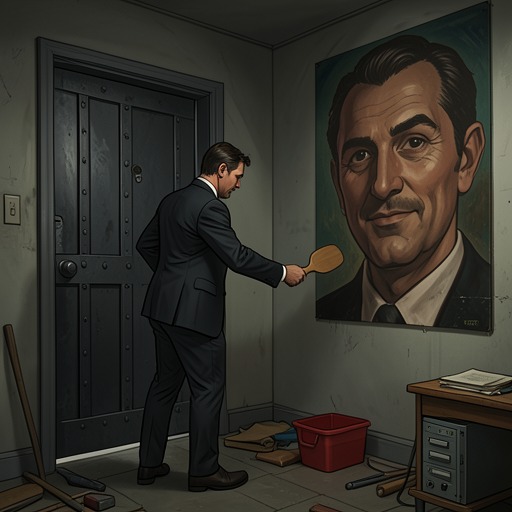
Later, after secretly checking the 1954 Boyarsky reservation book, the Count opens one of the desk’s hidden doors for the first time in almost thirty years. The timing matters: he had resolved to act months earlier, but news of the Conservatory’s goodwill tour has made the clock begin to tick. The desk is therefore associated not only with concealment but with the shift from intention to urgent preparation.
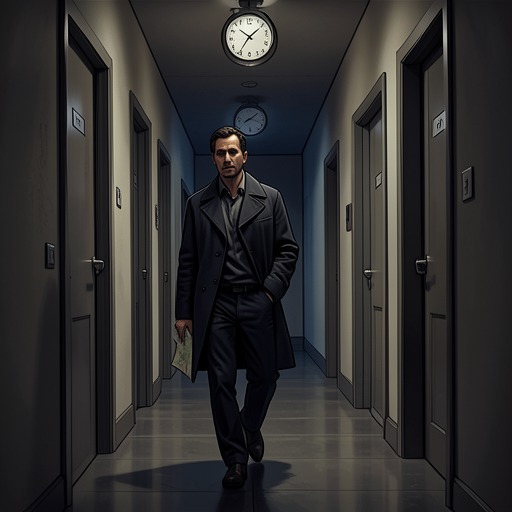
The Count subsequently brings his father’s copy of Montaigne’s Essays to the desk. As the twice-tolling clock signals noon, he reads passages marked by his father, then uses a razor to remove text from two hundred pages. In a nearby stage of his preparations, he also cuts a foldout map from the Paris Baedeker and draws a route from Avenue George V to Rue Pierre Charron and down the Champs-Élysées. The desk anchors this work: a place where inherited objects and practical materials meet the Count’s increasingly deliberate plans.